
Fraud rings, venues and vendor due diligence
AU10TIX is an identity verification company founded in 2002 and headquartered in Tel Aviv, with offices in New York, London, Singapore and Amsterdam. Its parent is ICTS International; in 2019 TPG and Oak HC/FT invested 80 million dollars in the business. The chief executive is Yair Tal. Clients outside gambling include Airbnb, PayPal and Fiverr, and in gaming it has worked with NeoGames on customer onboarding.
The problem Serial Fraud Monitor addresses
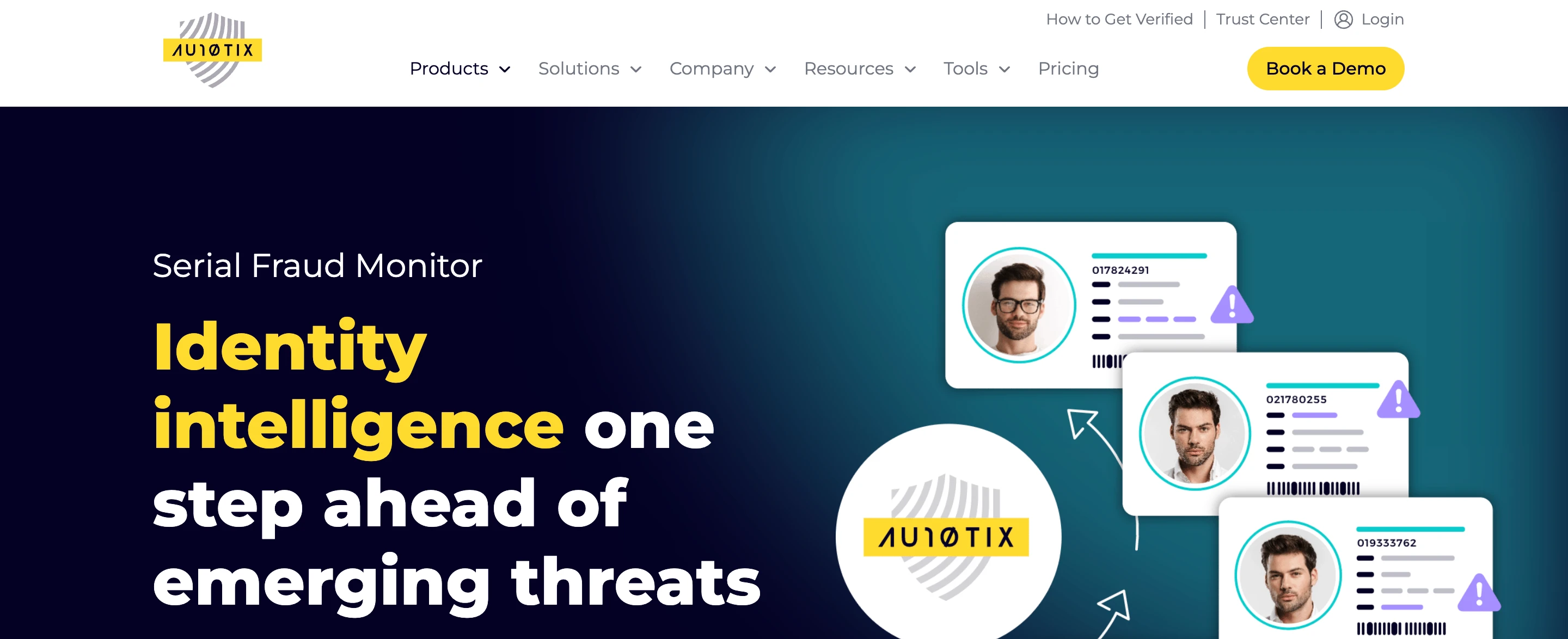
The product on this page targets fraud rings that create many accounts with forged or synthetic identities. A single fake ID can pass a document check; a hundred fakes made from the same template usually leave a pattern. Serial Fraud Monitor looks across verification traffic rather than at one document at a time, using neural networks, deepfake detection and a consortium of data that compares new attempts with known fraud signatures.
In iGaming, bonus abuse and multi-accounting are often organised attacks of exactly this kind. KYC that checks each player in isolation misses them; a traffic-level view catches them earlier, before welcome bonuses are paid out.
Online and on the venue floor
Integration runs through APIs and SDKs, alongside AU10TIX's main identity verification suite with AML and PEP screening. In 2025 Microsoft selected the company as an identity verification issuer for its Entra Verified ID platform.
In August 2026 AU10TIX announced a partnership with NEO, a maker of self-service terminals, which brings document checks, biometric matching, liveness detection and age assurance into terminals at Australian gaming venues. The companies say a process that took 30 to 40 minutes manually now takes a few minutes. For operators with both venues and an online brand, the same verification provider on both channels means one identity record rather than two.
Weighing it against other KYC vendors
| Question | Why it matters |
|---|---|
| Pass rate for genuine players in your markets | Every false rejection is a lost depositor |
| Coverage of local ID documents | Weak coverage pushes players to manual review |
| Speed of decision at registration | Slow checks raise drop-off before the first deposit |
| Data residency and retention | Some regulators set where identity data may be stored |
One point for due diligence: in 2024 it emerged that administrative credentials had been exposed in 2022, which the company disputed in terms of impact. Ask how data is stored and segregated for your jurisdiction, and what has changed in access control since then.